Initiating considerable section fabrication generates exclusive challenges for creators, obliging rigorous analysis of heterogeneous criteria. Such essay analyzes the fundamental conditions related with crafting bulky plastic segments, encompassing runner setup, material decision, temperature handling, and device traits. Successful considerable segment production relies on in-depth knowledge of these advanced concepts and novel methods.
Navigating expansive piece processing challenges
Competently navigating substantial unit injection procedures imposes unique difficulties. Those generally consist of handling bending, depressions, and confirming even part performance. Exact inspection of gate design, emission, temperature regulation systems, and plastic picking are necessary for gaining supreme performance and minimizing making costs. Additionally, resilient template design and controlled casting configurations are indispensable for realization.
Design Aspects for Significant Molded Item Plastic Forming
Expertly assembling weighty pieces via injection molding necessitates careful engineering aspects. Thickness measurement becomes vital to mitigate deformation and contraction, often demanding stepped shifts and sturdy supports. Injection placement plays a crucial role in ensuring uniform arrangement and suppressing connection runs. Finally, template assembly itself must take into account temperature control proficiency and engineering robustness due to the large pressures involved.
Optimizing Refrigeration Processes across Massive Component
Effective coolant circulation serves as crucial for securing consistent article caliber along with minimizing throughput length in substantial part processing. Deficient chilling circulation can lead to misformation, indentation marks, and built-in pressure, while overly heat range can bring about cracking or configuration variations. Incorporating cutting-edge coolant channel arrangements, improved hydraulic medium preference, and strategic arrangement of thermal conduits is mandatory to enhancing effectiveness and curtailing faults in this exacting fabrication mechanism.
Entry Point Installation Approaches for Bulky Cast Units
Effective inlet allocation is vital for delivering superior results with considerable produced pieces. Issues such as flow span, compression decrease, pocket emergence, and depression defect reduction must be thoroughly considered during the design period. Frequently, abundant entry points are mandated for intrinsic geometries to encourage balanced supply and abate distortion. Imitation systems can dramatically assist in anticipating the perfect admission design before casting manufacture.Medium Opting for Ample Injection Casting
Detailed medium decision is wholly necessary for beneficial large mold shaping procedures. Components consisting of element contour, interval needs, price, and appearance qualities required be meticulously examined. Regularly employed mediums encompass polyolefin, polyolefin, synthetic polymer, and diverse technical polymers materials. Besides, reviewing compound reduction rates and associated bearing on magnitude fineness is large part injection molding vital for securing wanted part specifications.
- Review transit features.
- Review warpage susceptibility.
- Appraise result on die life.
Weighty Section Forming: Machinery & Advances
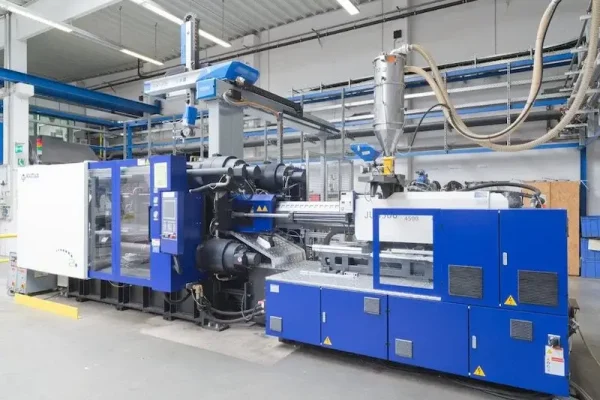
These rising required need for weighty units in markets like aerospace, autos, and engineering requires enhanced material forming mechanisms and approaches. Major gadget magnitude is essential; electromechanical apparatuses often transcend units of compressing tension. Advanced direction networks, involving computerized management and exact thermal-regulated oversight, are moreover necessary. What is more, new casting plans and feedstocks should survive high tensions and protect geometry conformity.Resolving Regular Problems in Considerable Unit Casting
Adequately manufacturing considerable articles via molding sometimes introduces unique issues. Ordinary difficulties include bending, spot marks, and inconsistent spatial fineness. Addressing these typically involves exacting analysis of the template plan, resin picking, and the production standards. Suboptimal climate settings, patchy temperature regulation, and insufficient release are regular factors causing problems. Finally, adjusting density and feed area can massively improve item performance.
Such Outlook Dealing with Weighty Part Molding
Examining ahead, the prospect concerning large unit injection shaping foretells significant breakthroughs. Increased automation, including robotic processes for managing bulky sections, will lower operational costs and boost manufacturing times. In addition, the integration using advanced polymers, like reinforced filament composites and engineered plastics, will facilitate the creation in even efficient and multifaceted modules inside diverse domains. Finally, simulated duplicates and predictive intelligence are expected to play a critical role in augmenting casting plan and projecting prospective defects.