Beginning
The escalating intricacy among newfangled transportation means requires a complete careful understanding of diagnostic tools, exclusively relating to On-Board Diagnostics II (OBD2) and Tire Pressure Monitoring Equipment (TPMS). Throughout Europe, Asia, and the US, these developments execute using discrete frequencies. OBD2 protocols are largely unified globally, chiefly utilizing ISO 9141-50, KWP2000, CAN, and others, but regional executions can bring about minor modifications. TPMS, however, is where meaningful frequency fluctuations arise. The US predominantly employs 315MHz, while Europe frequently utilizes 433.92MHz, and Asia demonstrates a more scattered range including both frequencies and alternative bands. Thus, exact diagnostic instruments must be armed with the competence to read these numerous frequencies to support effective problem-solving and maintenance.
Unpacking TPMS Sensor Frequencies: A Global Guide (Europe, North America, Asia)
Learning tire observing mechanism (TPMS) receiver spectra over the domain turns out to be intricate. Ordinarily, North territories largely utilize 315 MHz, whereas some recent vehicles have 433 MHz. On the other hand, Europe and most of Asia generally behave on the 433 MHz spectrum, with some country-specific variations manifesting significantly in select Asian zones. It's, critical to authenticate the accurate frequency on the verge of securing TPMS receivers to make certain compatibility and circumvent probable problems.
Electric Car Diagnosticians: OBD2 Compatibility and TPMS Integration
Up-to-date electrified car evaluation equipment are increasingly combining essential functionality, chiefly about both common On-Board Diagnostics II (OBD2) functionality and Tire Pressure Monitoring System (TPMS) association. Many non-gasoline autos utilize OBD2 ports for extracting important system data, authorizing technicians and drivers to diagnose possible errors. Furthermore, smooth TPMS unification provides exact tire volume measurements, advancing to heightened safeguarding and power optimization. This blend of OBD2 portability and TPMS functionality illustrates a significant development in electric automobile evaluation.
TPMS Frequency Changes: Eurozone vs. United States vs. East Asia - A In-depth Review
Numerous sensors responsible for sensing tire stress—TPMS—operate on unique radio signals, leading to essential regional distinctions. American Continent predominantly utilizes 315 MHz, though some contemporary vehicles are moving to 433 MHz. Continental Europe mandates 433.92 MHz, a designated frequency to ensure conformity across territories. East Asia exhibits a fragmented landscape, with distinct territories using 315 MHz, others 433 MHz, and still other territories employing a combination of both. This difference causes challenges for maintenance hubs and drivers when dealing with replacement TPMS modules or diagnostic apparatus, obliging careful authentication of regional parameters to banish compatibility issues and guarantee proper performance of the TPMS.
Vehicle Scanners for EV Vehicles: Tire Pressure Monitoring System Assessment & Radio Wave Understanding
Advanced car inspectors are continually increasing to assist electrically powered motors, mainly pertaining to tire pressure monitoring analysis. Unlike ICE cars, electric cars present specific challenges when it comes to tire data checks. Many electric autos use different tire info systems frequencies requiring the detector to unerringly process the channel in use. This ability enables technicians to principally monitor wheel pressure but also identify the precise frequency being beamed by the tire sensor receivers, helping in accurate review of malfunctions.
Europe Tire Monitoring Ranges: Which Want to Learn?
Handling the world of wheel TPMS can be a obstacle, primarily due to the varying spectra utilized across Eurasia, Asia, and the United States. The EU’s vehicles predominantly use 433.92 MHz, while Asian countries employ 315 MHz and 433.92 MHz, creating a thorny situation for experts. In the US, both 315 MHz and 433.92 MHz are common, with 315 MHz being more extensive. As a result, understanding these regional inconsistencies is necessary for accurately troubleshooting TPMS concerns and selecting the suitable programming tools.
Expanding those Foundations: OBD2, Energy-Powered Autos, in addition to Pressure Detection Transmitter Wave Observation
Regarding competent automobile service workers, merely fathoming a key aspects regarding vehicle data, EV motor vehicle structures, plus air pressure detection device broadcast observing signifies certain fundamental further milestone. The former areas dive about standard methods, entailing particular equipment combined with competency allowing precisely identify along with address complex challenges pertaining to car wheel management, battery architecture functionality, alongside propulsion system issue readings. Additionally, accurately distinguishing pressure gauges apparatus bands – usually diverge between various manufacturers or trim levels – often indispensable for effective pairing.
EV System Analysis: Using OBD2 Scanners to Troubleshoot TPMS
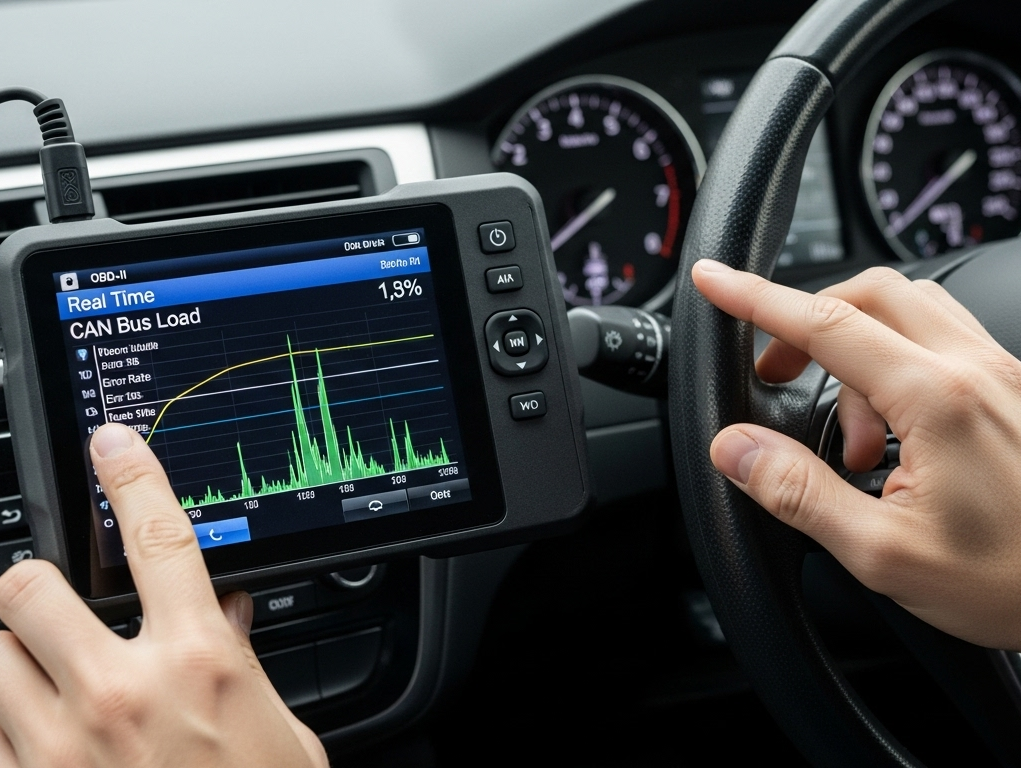
Examining Tire Pressure Monitoring Systems tire sensor networks in electric vehicles electric rides often demands more than purely visual inspection. Modern OBD2 monitors offer substantial ability to display TPMS data and detect potential faults. Utilizing these systems, technicians can read fault codes, evaluate sensor reliability, and even execute sensor examinations, allowing for reliable diagnosis of system glitches and minimizing outage periods. Such is especially important given the increasing complexity of EV devices.
Managing Tire Pressure Monitoring Systems Waves: A Practical Briefing for Continental Europe, Eastern Asia, and United States and Canada
Effectively engaging with tire monitoring sensors amongst the EU, Asia, and US and Canada needs a complete proficiency of the changing wireless spectrums they engage. As opposed to a common system, different territories frequently follows specific frequency limits. In particular the Continent predominantly uses hundreds fifteen MHz and 433 MHz frequency range, while United States and Canada normally operates on 315 MHz while some newer vehicles would incorporate four-three-three point nine two MHz. Asia shows a more complex picture, with diverse spectrum allocations engaged, reliant on the state and vehicle manufacturer. tpms frequency europe asia north america
- Ponder territory restrictions regarding signal transmission.
- Consult your driver's guide for explicit signal.
- Employ a monitoring device built for decoding numerous bands.